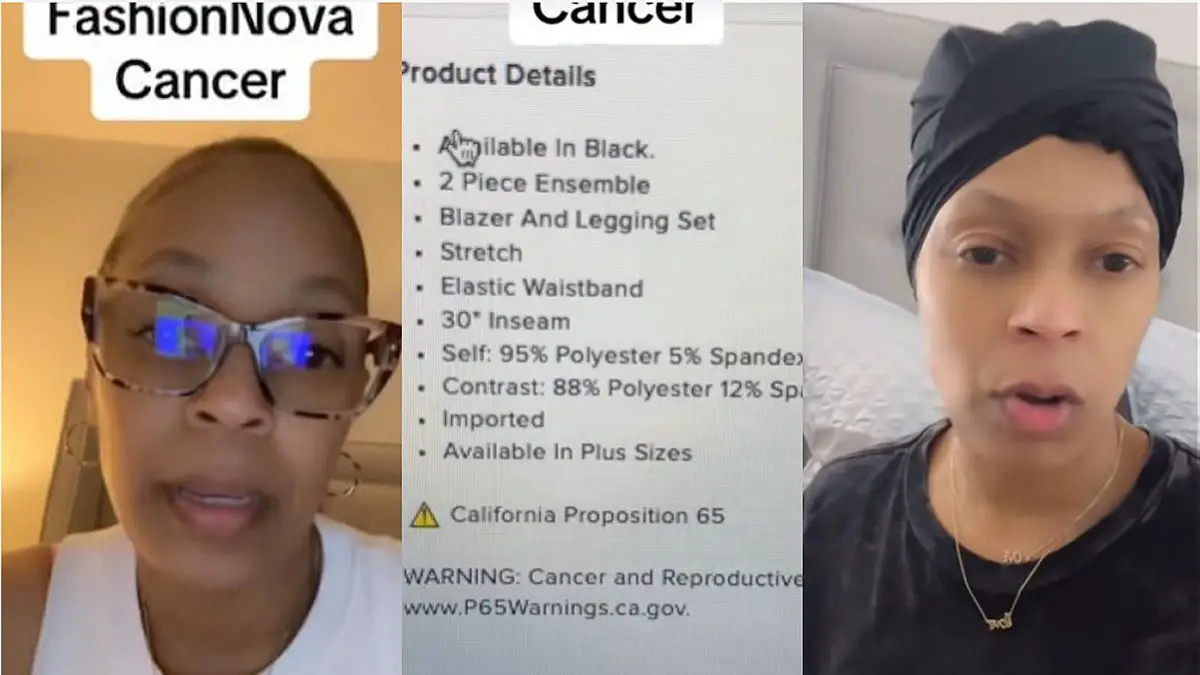
A Maryland woman thought she was simply shopping for a stylish new pantsuit when she stumbled upon something that immediately set off alarm bells. While scrolling through an online retailer’s product page, she noticed a small but jarring notice tucked into the details section. At first glance, it seemed like a standard product description. But reading further, she found a warning referencing “Cancer and Reproductive Harm” that left her deeply concerned.
The label, mandated under California Proposition 65, is designed to inform consumers about potential exposure to chemicals that could contribute to cancer or reproductive issues. The warning does not necessarily mean a product is unsafe. However, it is disturbing enough that she felt the need to spread the word via TikTok.
However, it signals the presence of trace substances that fall under California’s disclosure rules. For the Maryland shopper, the message was shocking. Especially because she was not purchasing the item in California and was unfamiliar with the law.
Maryland Woman Warns Others After Scary Discovery Online
Proposition 65 notices can appear on a wide variety of everyday items, including clothing, furniture, electronics, and even certain foods. In this particular case, the clothing set she was viewing contained synthetic materials like polyester and spandex, which can sometimes include chemicals such as bisphenol A, a compound often listed under Prop 65 guidelines.
After sharing her experience online, many consumers expressed alarm. Some argued that these warnings make it nearly impossible to shop without worry, while others warned against buying synthetic fabrics altogether. Social media reactions highlighted a mix of fear, frustration, and curiosity, with several users admitting they had never really noticed the labels on everyday products.
Numerous Products With Cancer Warnings
This isn’t an isolated issue. Many household items carry similar notices, from upholstered furniture at major retailers to children’s toys, personal care products, and even certain packaged foods. Brands like IKEA, Levi’s, and even some snack food companies regularly include these warnings to comply with California law.
“Can’t eat nothing, can’t wear nothing, We’re NOT Safe anymore,” one follower writes.
“Don’t buy anything with that warning,” suggests another.
“Literally so many companies. Even Chick-fil-A and McDonald’s. This is nothing new,” one more adds.
Consumers concerned about exposure should look for labels in the product description, packaging, or official website details. Checking ingredient lists, researching chemical names, and understanding the difference between a disclosure notice and a confirmed hazard can help reduce unnecessary worry.
For shoppers nationwide, the lesson is clear. These warnings are everywhere, and awareness is key. Reading product details, understanding labels, and doing quick online checks can prevent alarm while keeping you informed. Even items as seemingly harmless as clothing, furniture, or household goods may carry trace chemicals that are flagged for disclosure, not necessarily danger.
The Maryland woman’s discovery is a huge wake-up call for shoppers everywhere. While the warning may not indicate an immediate risk. It reminds consumers to pay attention to labels, read product details carefully, and make informed choices. In an age where even everyday items can carry subtle chemical notices, a little awareness goes a long way toward safer shopping.