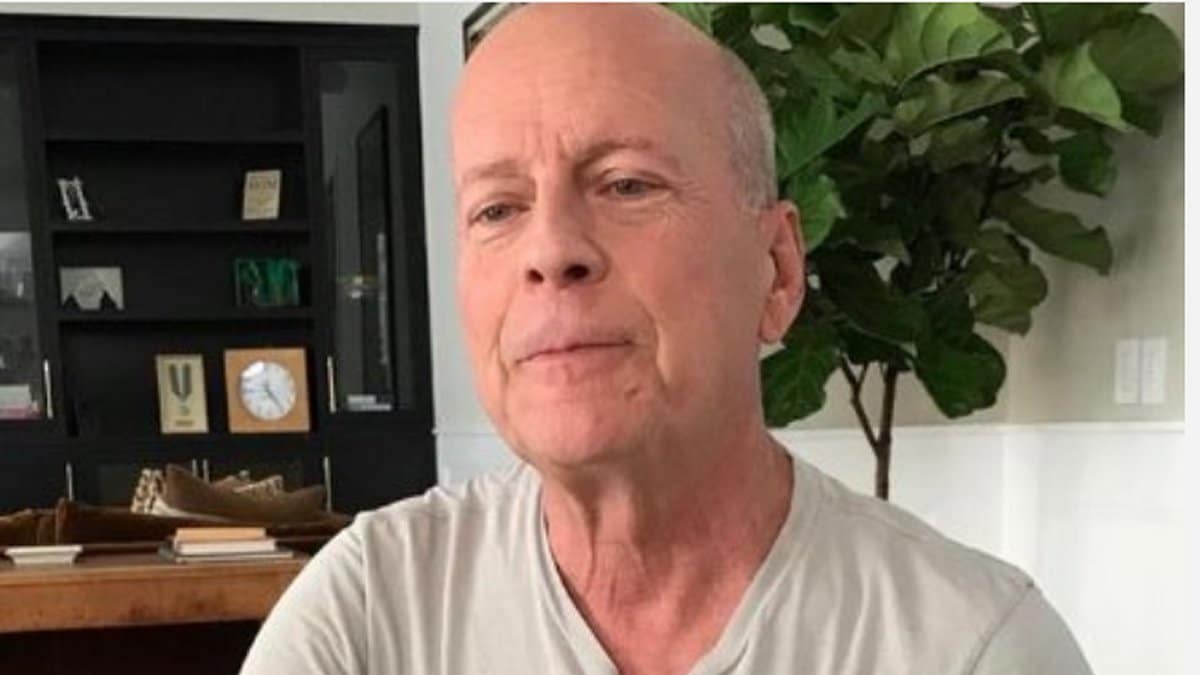
It’s been four years since “Die Hard” star Bruce Willis’ career came to a complete halt following a heartbreaking health diagnosis. In 2022, the actor’s family publicly announced that Willis would be stepping away from his acting career after the 67-year-old was diagnosed with aphasia. Fast forward to the present time, Bruce’s condition has continued to progress to FTD (frontotemporal degeneration/dementia).
Over the years, Bruce and the Willis family have fought a tough battle. As things continue to change rapidly, one thing that hasn’t changed is the love and devotion that the family continues to shower on Bruce. Sadly, there is no cure for FTD, but despite the grim prognosis, the Willis family continues to stand strong and refuse to give up hope.
From Emma Heming to Demi Moore, Bruce Willis’ Family Remains Focused on His Care
Over the years, Bruce’s wife, Emma Heming Willis, their young daughters, Mabel Ray Willis, 14, and Evelyn Penn Willis, 12, as well as ex-wife Demi Moore and their daughters, Rumer, Scout, and Tallulah, have stepped up to ensure he is surrounded by constant love and support.

It hasn’t been easy on them. They have been forced to make some hard decisions concerning the best routes to take for Bruce’s care. One of the most difficult, according to Radar Online reports, was to relocate him to a nearby home where he can receive 24/7 care.
Emma Heming revealed, per Radar it is not a cold, heartless decision, but one that the entire family discussed and decided on together. They have a second one-story home that serves as a family home. This one is much more comfortable and easier for Bruce to navigate and also houses Bruce’s around-the-clock care team.
Keeping a Positive Outlook
In a recent National Examiner update, sources tell the publication that the Willis family continue to remain optimistic that new treatments being developed may still help Bruce’s condition. “They’re all looking into everything, and they are open-minded even about risky drugs and surgeries that are still in the clinical trials phase,” reveals the source. “Anything Bruce might be remotely eligible for, they’re inquiring about.
“They refuse to give up hope, and especially at a moment when AI is directly and positively influencing medical research, the next breakthrough could be right around the corner,” the source adds. “Everybody is way more optimistic about this research as it pertains to Bruce than they were even just one year ago!”
What is FTD?
So what is FTD (Frontotemporal Dementia)? The NIA, also known as the National Institute on Aging, defines FTD as a group of disorders that affect the brain. The brain disorder causes damage to nerve cells in the frontal and temporal lobes. These are the main areas that regulate personality, behavior, decision-making, and emotions.
Unlike Alzheimer’s disease, which is more common in older adults, frontotemporal dementia often develops at a younger age. According to the National Institute on Aging, approximately 60% of people with FTD are between the ages of 45 and 64. Symptoms can include changes in personality, behavior, judgment, speech, eating habits, and movement.
The ASHA (American Speech-Language-Hearing Association) also cites that there are 2.7–4.1 new FTD diagnoses per 100,000 people annually. However, numerous cases each year often go undiagnosed.
“Physically, Bruce is still relatively young, and he has an excellent diet and exercise routine, which makes him an optimal candidate for new treatments,” says the source. So with the advancement in medicine and the Willis family’s positivity and ongoing care and love it is easy to see why the family remains optimistic that one day they may see the old Bruce Willis return to them. After all, miracles happen every day.


Joann covers high-profile industry features, investigative entertainment stories, and long-form trending media profiles. She has 15 years of experience in the online news vertical.