In Arizona, a routine pharmacy pickup recently took an unsettling turn, raising concerns about how closely prescription instructions are reviewed before landing in patients’ hands. What initially appeared to be a harmless errand quickly left one woman second-guessing what she was being told about her medication. At first glance, nothing seemed out of the ordinary. But a closer look revealed something that didn’t sit right at all.

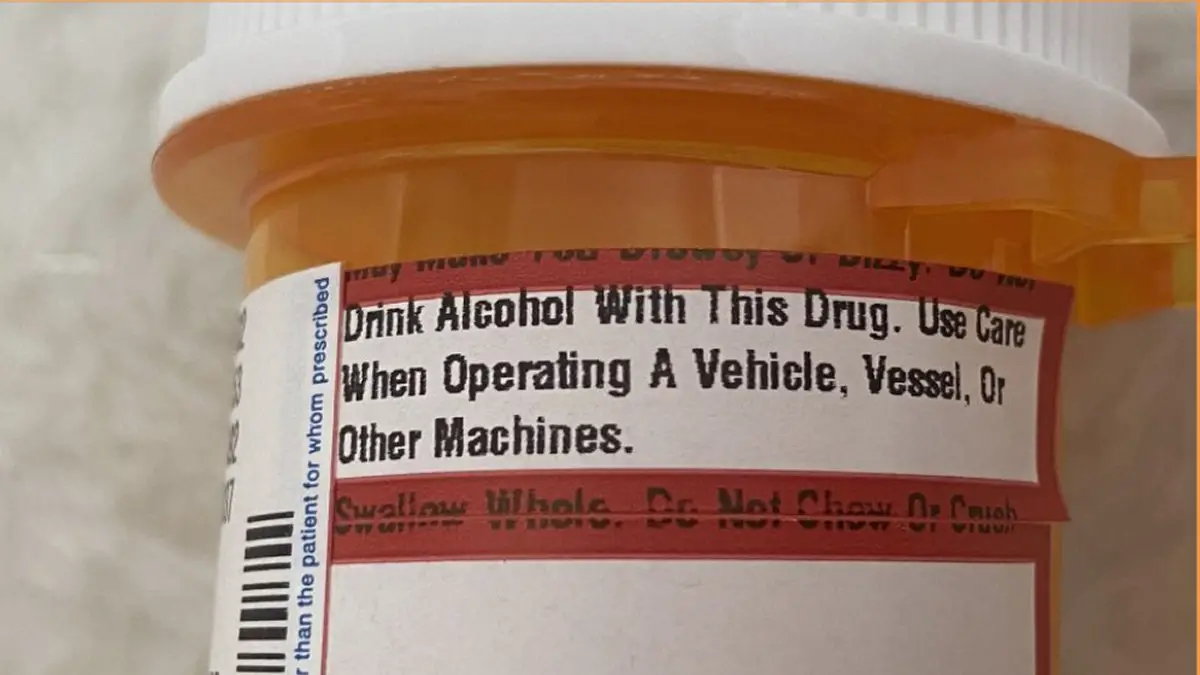
The confusion didn’t become clear until she actually examined the label on her antidepressant bottle. What should have been straightforward medical guidance instead appeared to suggest behavior that most people know should never be paired with prescription drugs. The wording alone was enough to stop her in her tracks and spark concern about how such an error could happen in the first place.
Once the issue was examined more closely, it became apparent that the problem wasn’t medical advice gone rogue. It was a poorly printed and misplaced label. The visible text on the bottle appeared to instruct the patient to drink alcohol with the medication. However, it was obvious that part of the warning had been cut off or printed above the visible section, likely intended to say the exact opposite.
Arizona Patient Discovers Printing Error With Serious Implications
The issue stemmed from how the label was printed and applied to the bottle, leaving only part of the instructions visible. While many people would instinctively know not to mix alcohol with antidepressants, the concern wasn’t about common sense. It was about accuracy, professionalism, and safety. A prescription label is not the place for ambiguity.
Mistakes like this don’t just look sloppy. They can be dangerous. Not every patient has the same level of medical knowledge, and prescription instructions exist for a reason. Even a minor printing error can lead to confusion, misuse, or hesitation about taking a necessary medication. In Arizona and elsewhere, pharmacies are expected to double-check labels to ensure instructions are clear, complete, and impossible to misinterpret.
While many online reacted with humor, others pointed out that this kind of oversight should never leave a pharmacy counter. A single missed detail could have serious consequences if misunderstood by someone who takes instructions at face value.
Misinformation on a Prescription
If you ever notice confusing or incorrect instructions on a prescription, stop immediately. Contact the pharmacy or your doctor before taking the medication. Errors like this are uncommon, but they do happen. Often due to automated systems, rushed workflows, or human oversight. It’s critical to read every label carefully.
“That ain’t mildly infuriating, it’s straight up illegal,” one Redditor writes.
“I wish I could believe that no one is dumb enough to be like, ‘well, alright,” another adds.
“That’s a lawsuit waiting to happen,” one more claims.
Ask questions, and educate yourself about any medication you’re prescribed. Understanding potential interactions, side effects, and warnings can protect you from preventable harm. Your health should never rely on assumptions.
This Arizona incident underscores how even small errors in healthcare settings can cause unnecessary alarm and potential risk. Prescription labels are meant to provide clarity, not confusion. Taking a few extra moments to read, question, and confirm instructions can make all the difference. Because when it comes to medication, accuracy isn’t optional.


Emma Taylor is a self-proclaimed book nerd who loves to write about projects moving from the page to the screen. Whether it’s Twilight, Acotar, or Fourth Wing, she’ll keep you informed on the latest bookish news.