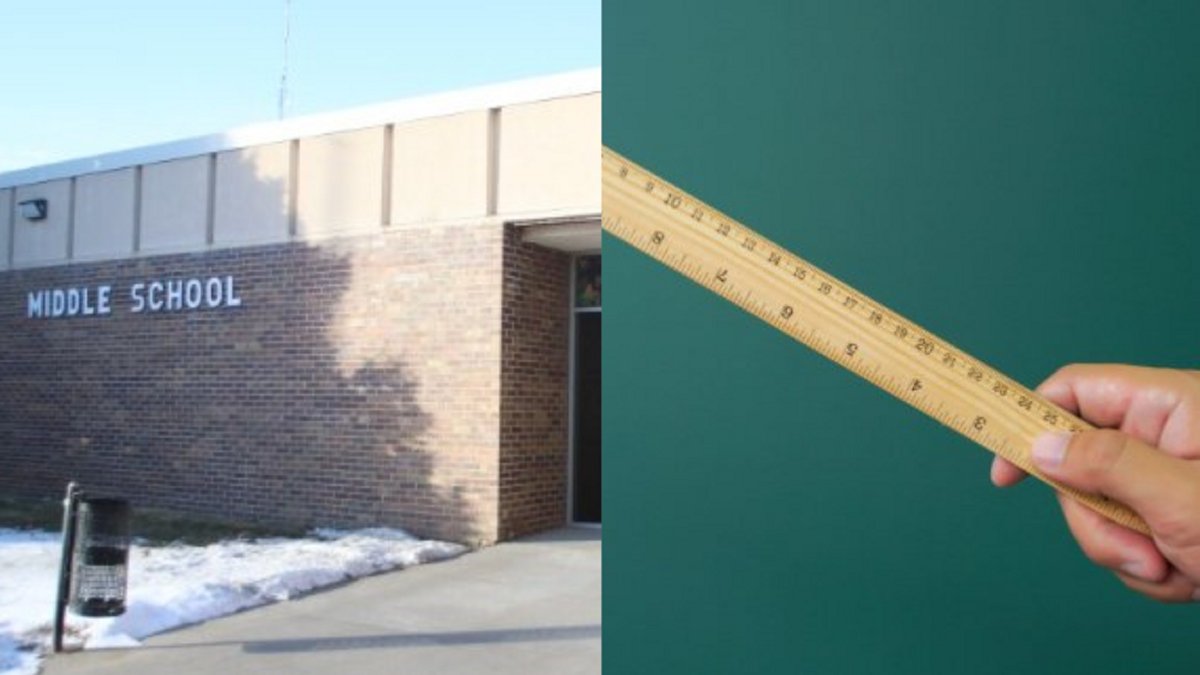
What should have been a minor classroom moment in a Virginia 8th-grade middle school classroom has now turned into a serious concern for one familyand a larger conversation about student safety. A single word, spoken casually among friends, reportedly set off a chain reaction that no parent wants to imagine happening inside a school.
According to the student’s mother, her eighth-grade daughter was chatting with classmates when she used the word “freaking.” That’s it. No profanity. No shouting. Just a mild expression that most people hear every day. Still, the teacher allegedly snapped to attention, demanding to know exactly what had been said. When the girl calmly repeated the word and clarified that she hadn’t cursed, the situation didn’t cool down. It escalated.
The teacher reportedly instructed the student to come to the front of the room, told her to hold out her hand, and then struck her palm with a thick wooden ruler. The girl, obviously caught off guard and embarrassed in front of her peers, quietly returned to her seat. It wasn’t until a friend encouraged her to report the incident that administrators were notified and her mother learned what had taken place.
Virginia Mom Demands Accountability After Classroom Crosses the Line
Her mother has since made it clear that her daughter is an honor roll student with no record of behavioral issues. She describes her as respectful, focused, and hardly the type to stir up trouble. That context makes the alleged punishment feel even more disproportionate. Being physically struck over a word like “freaking” has left the family not only upset. And determined to seek accountability.
In Virginia, public schools prohibit corporal punishment. Teachers are not allowed to use physical force as discipline, and striking a student with an object crosses a clear boundary. School policies throughout the state reflect this stance.
When parents believe the line has been crossed, they have the right to act. Filing a formal complaint with the school district, requesting a written investigation, and consulting with legal counsel are all reasonable steps. Keeping records of conversations and any evidence related to the incident can be critical if the matter escalates.
Law Draws a Clear Boundary
Beyond the legal implications, there’s the emotional impact. Being called out, ordered forward, and physically struck in front of classmates can leave a lasting impression on a young teenager. Schools are meant to be environments where students feel protected and respected. Not intimidated.
“If this happened outside of the classroom, you wouldn’t hesitate to file a police report for assault on a minor. I see no reason to do differently just because it happened at school. Don’t just leave it in the school’s hands,” one Redditor firmly advises.
“That teachers should be on administrative leave by tomorrow. Her actions were illegal and wildly inappropriate,” another commenter states.
“File a police report. You want to ensure that not only is the teacher fired from your school district, but that she cannot be hired into any other district where she can continue to abuse children,” suggests another.
Parents are justified in taking a firm stance. Trust between families and schools depends on adults modeling self-control and fairness. When that trust is shaken, silence is not the answer. This alarming situation serves as a reminder that discipline must never become physical.
Virginia law is clear, and parents have every right to defend their child’s safety and dignity. Classrooms should empower students. Not leave them fearful of speaking at all.


Nina Franklin can’t get enough of entertainment news. Movies, music, TV, celebrities, books, whatever it is she’s interested in it. She loves consuming content and sharing her findings with her readers.